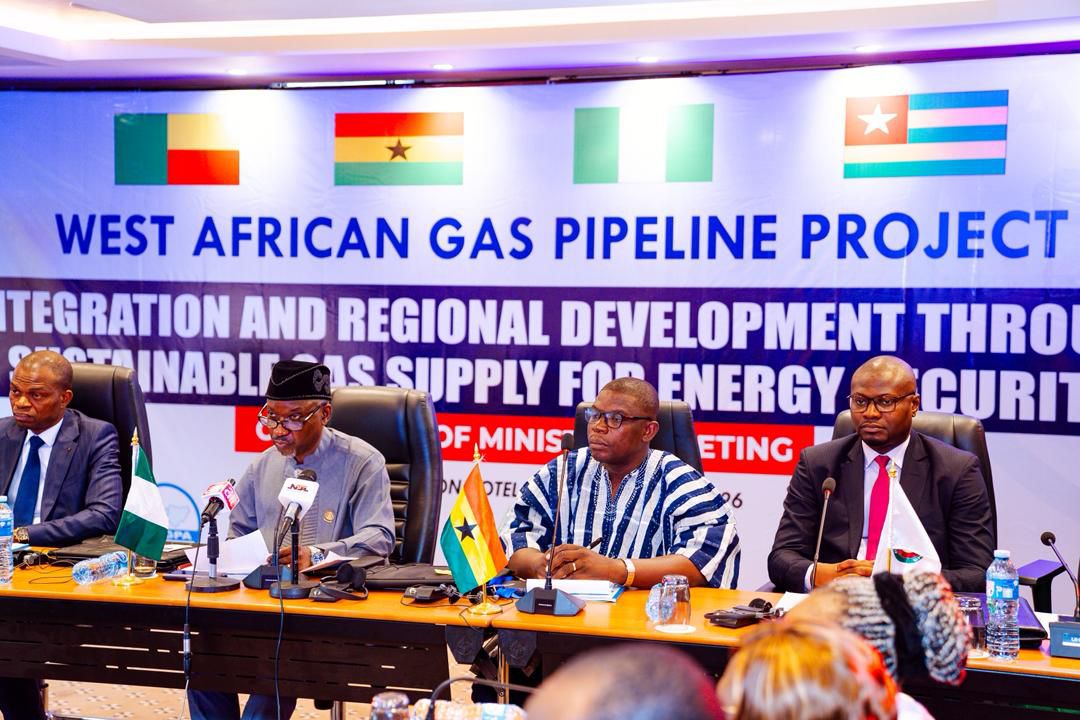
The Federal Government has reaffirmed its commitment to the success of the West African Gas Pipeline (WAGP) project, describing it as a critical driver of regional integration, energy security, and economic growth in West Africa.
Speaking at the meeting of the Committee of Ministers (CoM) of the WAGP Project, the Minister of State Petroleum Resources (Gas) and Chairman of the Committee, Rt Hon Ekperikpe Ekpo, said Nigeria remains fully dedicated to the continued success, reliability, and sustainability of the project.
“For our country, Nigeria, this project remains of utmost importance. As the major gas supply source and a founding state party, Nigeria attaches the highest strategic value to the West African Gas Pipeline.
“We see it as more than a pipeline. We see it as a practical instrument of regional solidarity, a channel for shared prosperity, and a living example of a shared vision translated into infrastructure, trade, and development.
“Nigeria, therefore, reaffirms in clear terms its full commitment to the continued success, security, reliability, and sustainability of the WAGP project. In this regard, I also wish to reaffirm Nigeria’s commitment to the legal and institutional strengthening of the WAGP framework,” he said.
Ekpo said the meeting was convened in line with the provisions of the WAGP Treaty, which established the committee as the highest decision-making body for the project.
He explained that the gathering provided an opportunity to review progress, address implementation challenges, and chart a strategic course for the future of the pipeline system, building on deliberations from a previous meeting held in Accra in April 2025.
The Minister disclosed that the project has significantly expanded energy access, created a viable market for natural gas, and strengthened cross-border cooperation among participating countries.
According to him, since inception, the pipeline has transported over 613 million million British thermal units (MMBtu) of natural gas, with Nigeria supplying more than 68 per cent of volumes delivered to downstream markets in Benin Republic, Togo, and Ghana. In 2025 alone, the system recorded over 80 MMBtu, representing a 22 per cent increase.
He noted that the project, rooted in the energy policy of the Economic Community of West African States (ECOWAS), has demonstrated that regional cooperation can deliver tangible benefits, including industrial development and improved energy balance across member states.
Describing the pipeline as more than infrastructure, the Minister said it has become a symbol of regional solidarity and shared prosperity, strengthening commercial ties and expanding access to cleaner energy across West Africa.
He reaffirmed Nigeria’s commitment to strengthening the project’s legal and institutional framework, noting ongoing efforts to amend the WAGP Act to align with treaty obligations and evolving needs.
The Minister also called for sustained support from the ECOWAS Commission, particularly in facilitating the free movement of WAGP officials, which he said is vital for effective treaty implementation.
In his remarks, the President of the ECOWAS Commission, Dr Umar Touray, pledged continued support, urging stakeholders to deepen collaboration to achieve the project’s objectives.
Similarly, the Director-General of the West African Pipeline Authority (WAPA), Madam Chafari Hanawa, and the Managing Director of the West African Gas Pipeline Company Limited (WAPCO), Mr Abiodun Bodunrin, called for sustained cooperation among member states to consolidate gains and position the project for future growth.
The event, attended by energy ministers from Ghana, Togo, and Benin Republic, featured the signing of resolutions and communiqués from previous CoM meetings, as well as deliberations on the role of WAGPA within Africa.